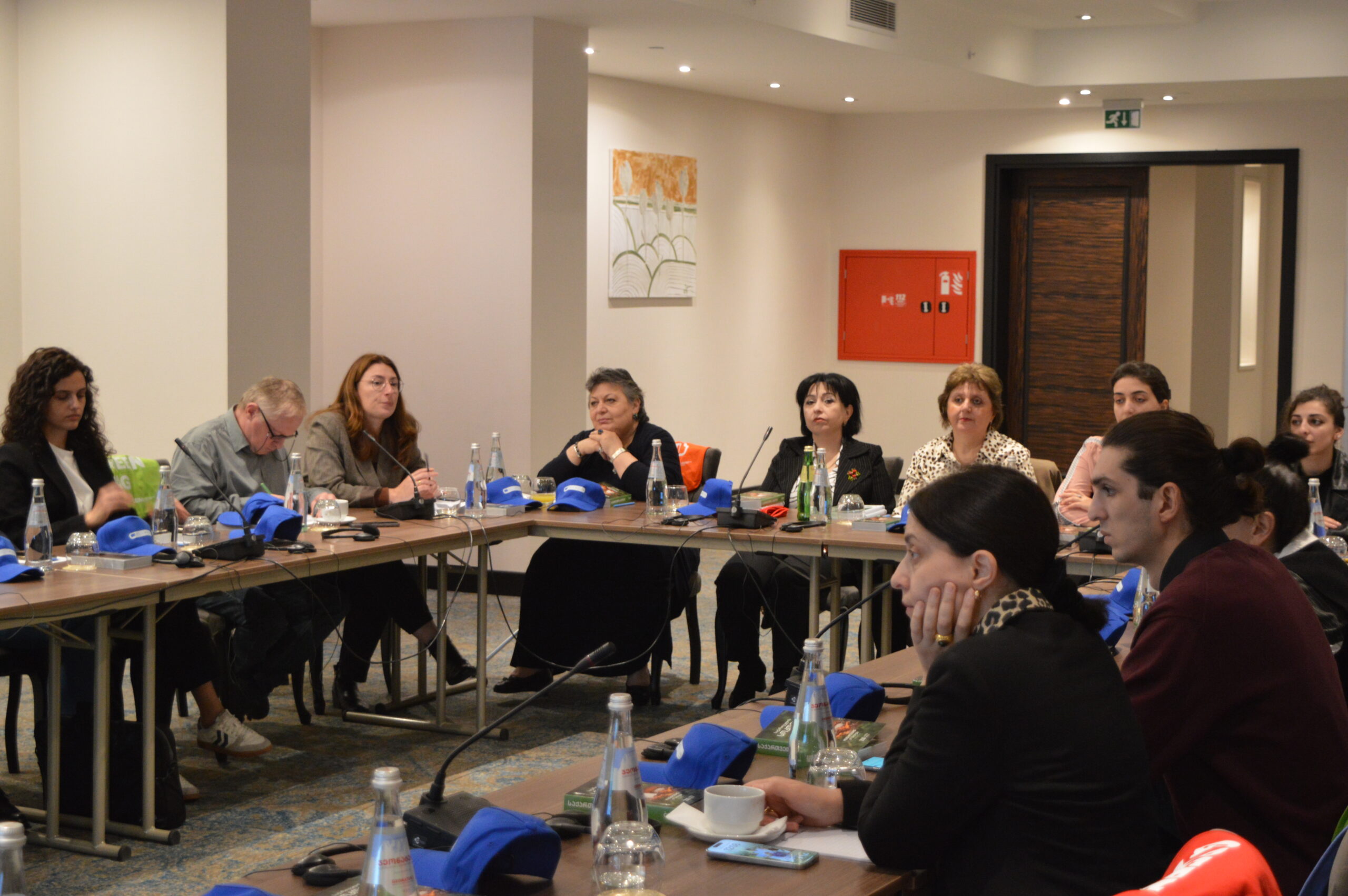
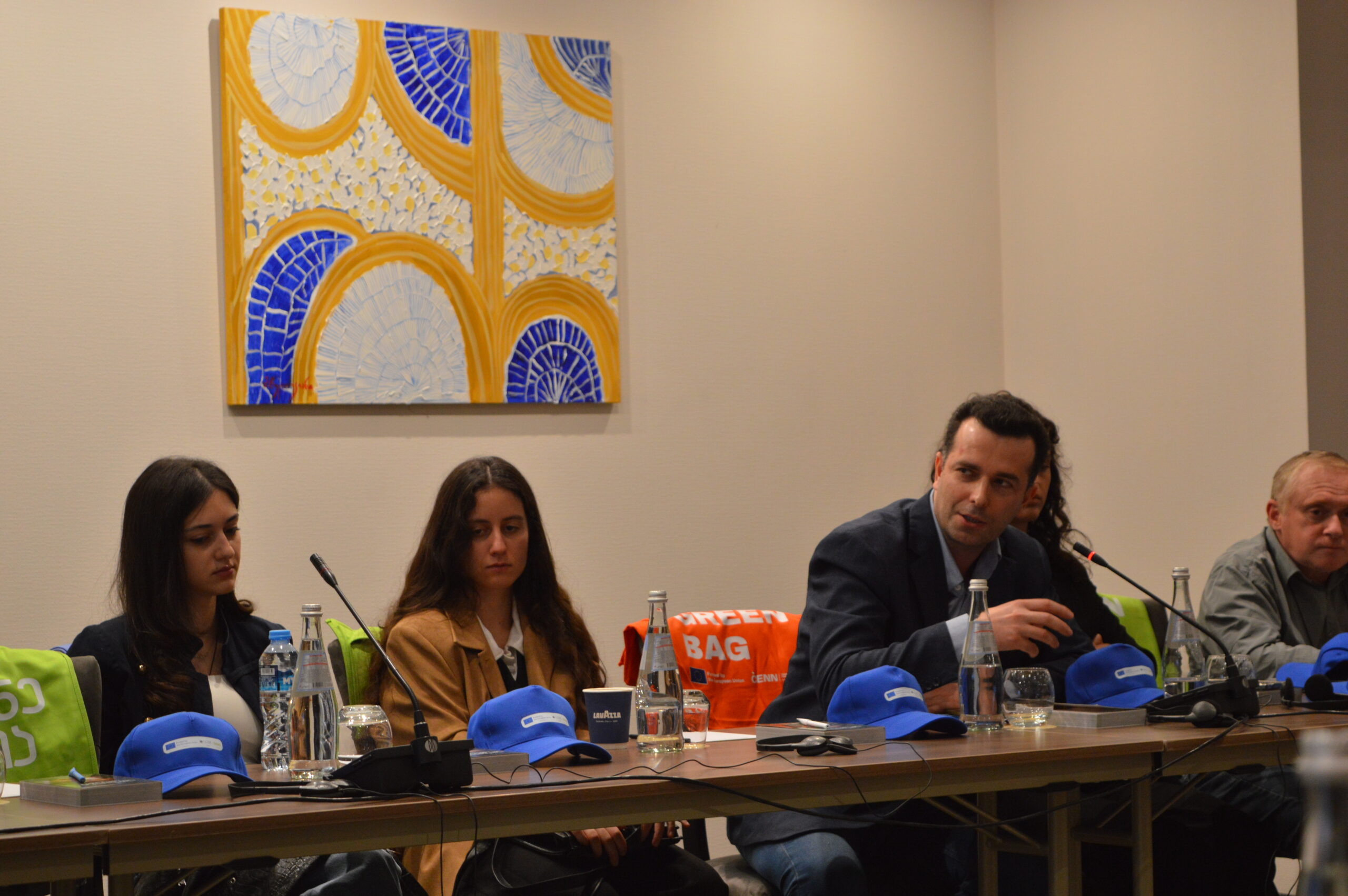
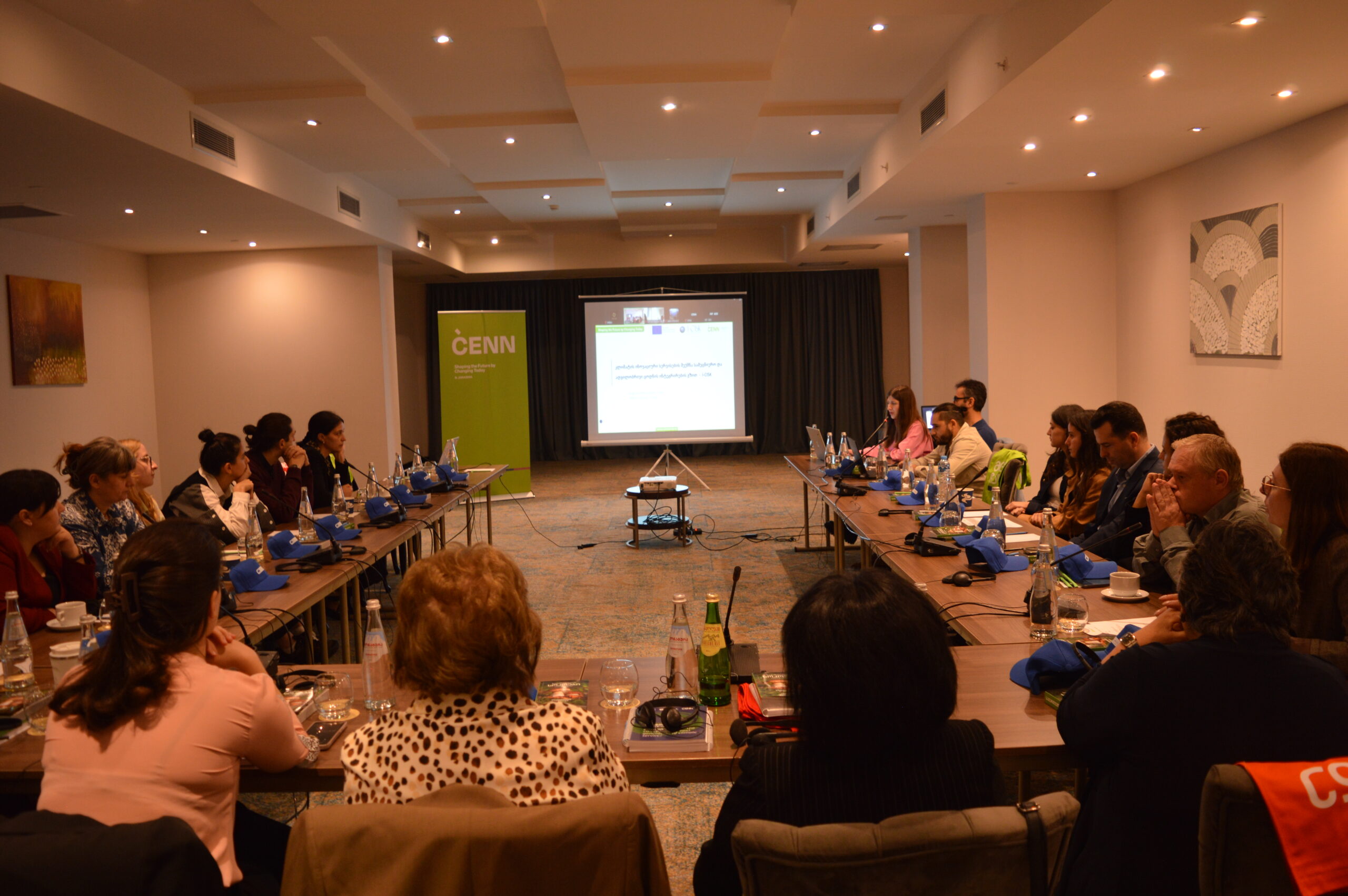
On September 30, 2025, the concluding meeting of the Alazani Multi-Actor Platform (MAP) took place in Tbilisi, bringing together more than 25 local stakeholders, researchers, and international experts to reflect on the results achieved under the EU-funded Innovating Climate Services Through Integrating Scientific and Local Knowledge (I-CISK) project.
The Alazani River Basin, located in Georgia’s Kakheti region, has its headwaters in the Caucasus Mountains and is characterised by a humid subtropical climate. Water resources in the basin are under growing pressure due to strong seasonal variation in precipitation and streamflow, which depend heavily on snowmelt and glaciers. These dynamics create recurring risks of drought, alongside seasonal flooding in certain watersheds. At the same time, the basin is central to Georgia’s socio-economic development, supporting agriculture, forestry, energy (hydropower), water supply, the environment, tourism, and drinking water security.
Within this context, the Alazani-Iori Basin was one of seven Living Labs where I-CISK worked on co-creating the next-generation climate services with local communities to strengthen drought monitoring and hydrological forecasting at the river basin scale. This tool will support local farmers by delivering reliable, user-friendly data for informed decision-making, crop planning, and water allocation.
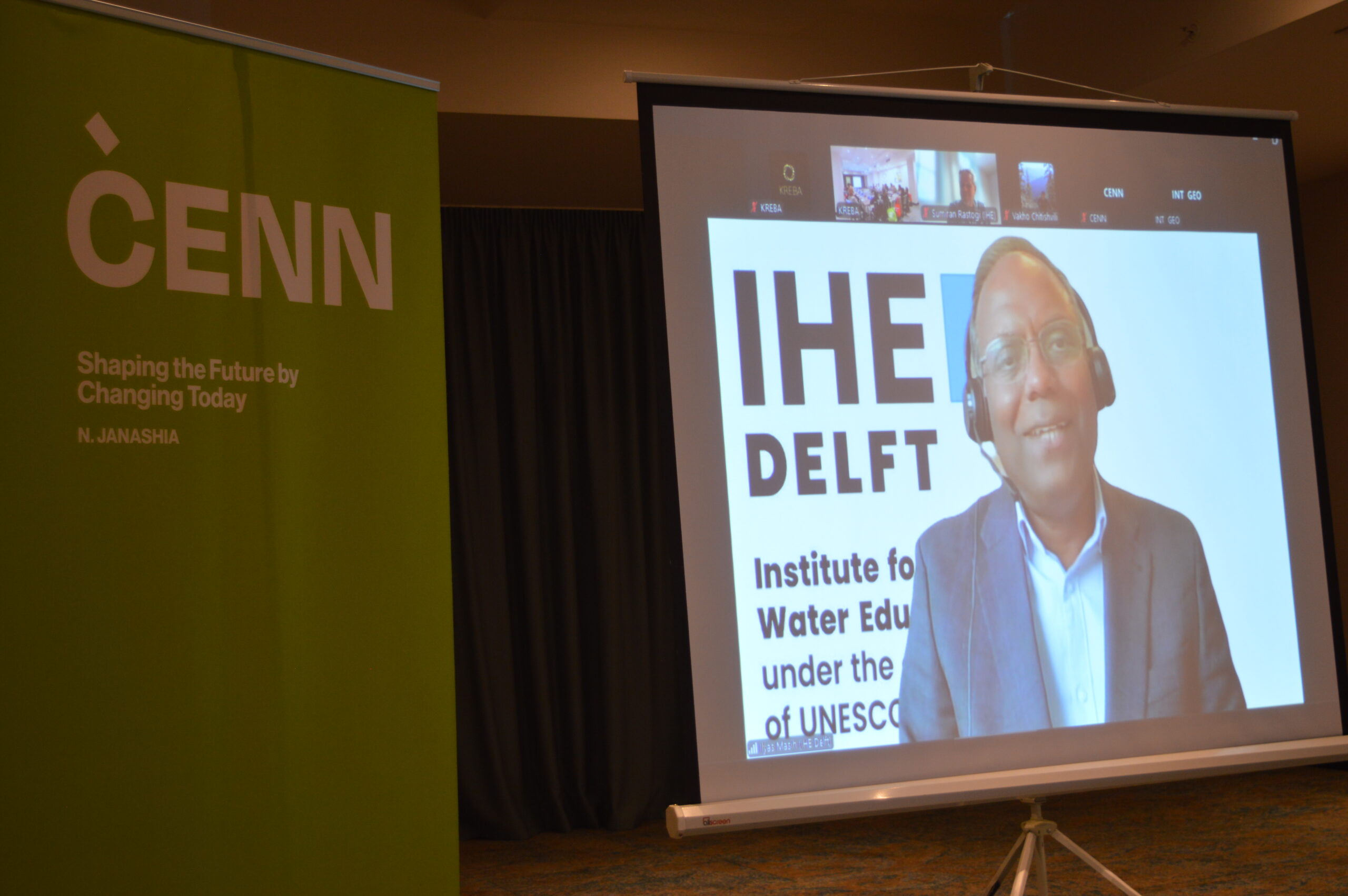
The concluding meeting, hosted by CENN in collaboration with IHE Delft, presented these achievements and facilitated discussion on sustaining climate services in Georgia. The agenda featured presentations on project outcomes, sustainable agriculture, and global perspectives on I-CISK’s work across Europe and Africa. A highlight was the screening of a mini-documentary capturing local voices from the Alazani Basin, illustrating the project’s human-centred approach.
By addressing challenges such as seasonal water scarcity and competing sectoral needs, the Alazani Living Lab demonstrated how tailored, co-created climate services can empower communities and authorities to act. The concluding meeting not only celebrated these results but also emphasized the importance of continuing this collaborative approach to ensure the basin’s future resilience.
For more details about the project, please visit the website: www.i-cisk.eu