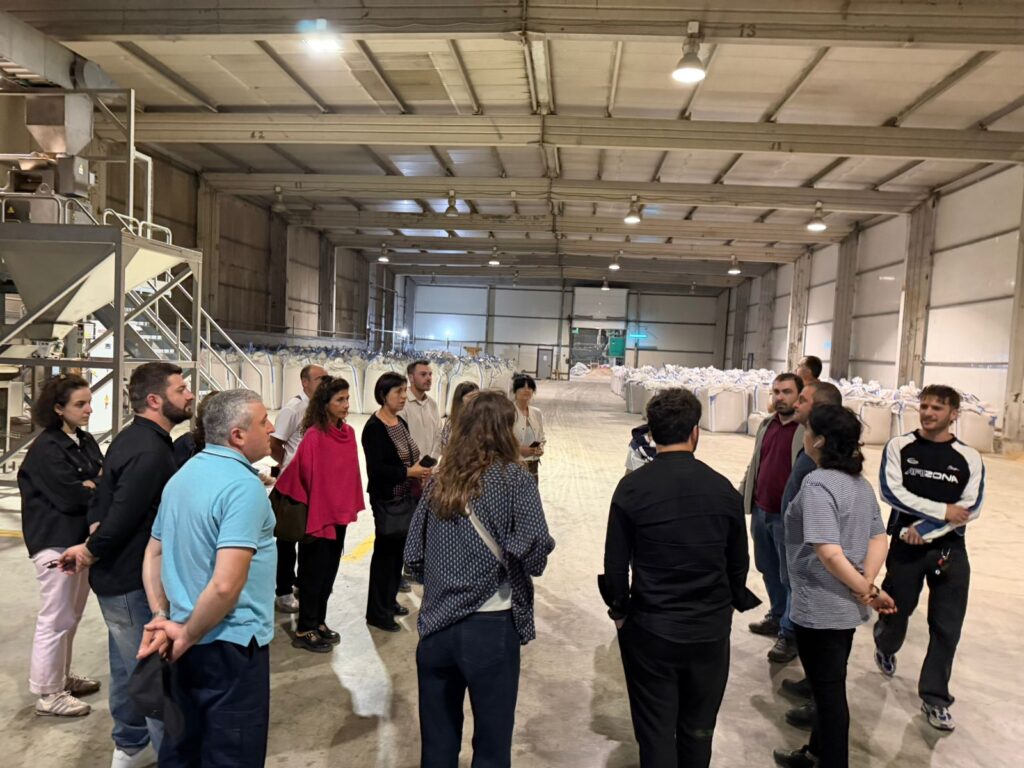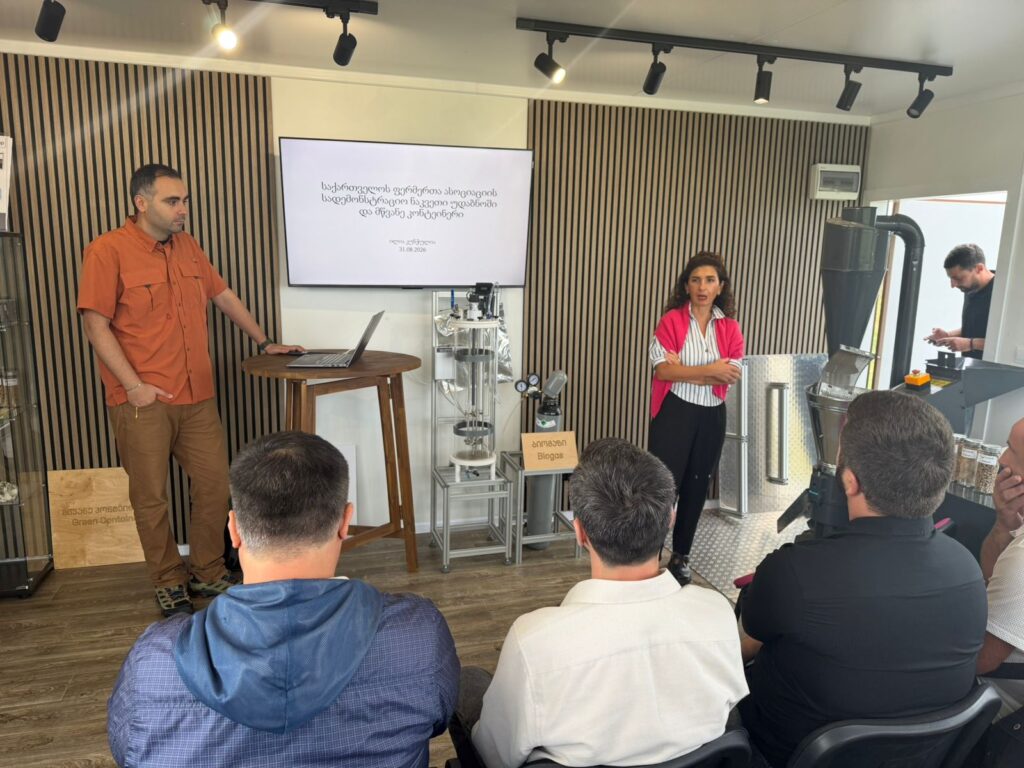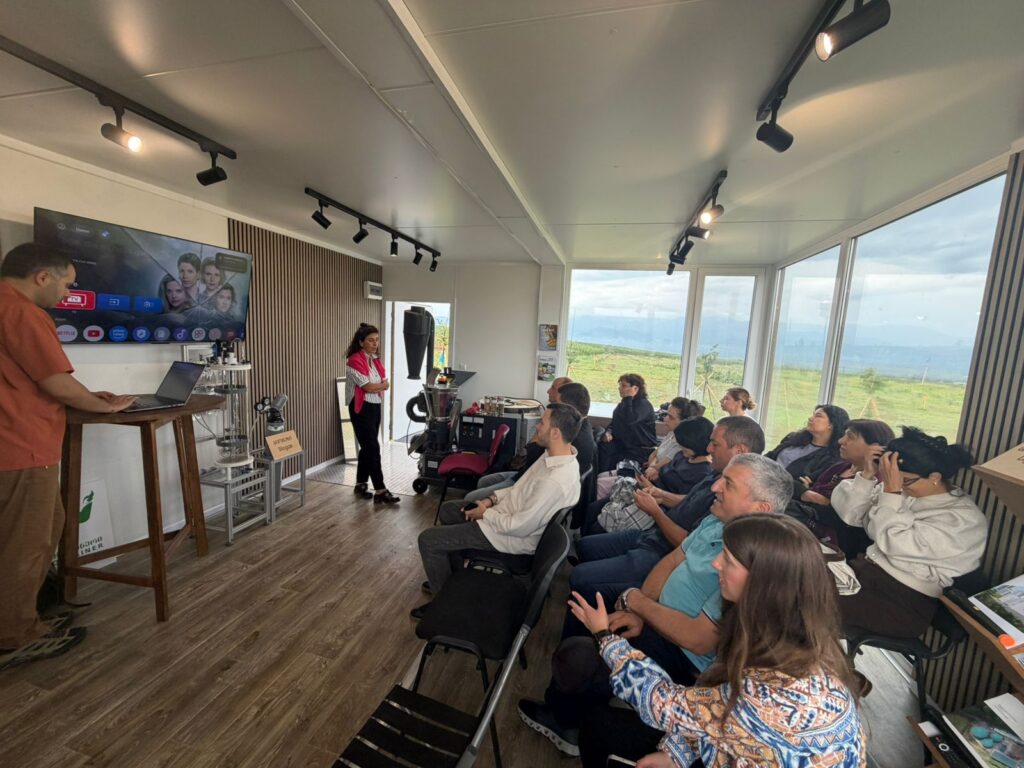
How can we turn agricultural waste into a valuable resource and maintain natural balance? – These were the key questions addressed during the interregional meeting and study visit held in Kakheti on August 31, dedicated to circular practices and regenerative agriculture. The event was organized in partnership with the Georgian Farmers’ Association and Ajara Group, who are also members of the Circular Economy Dialogue Interregional Platform.
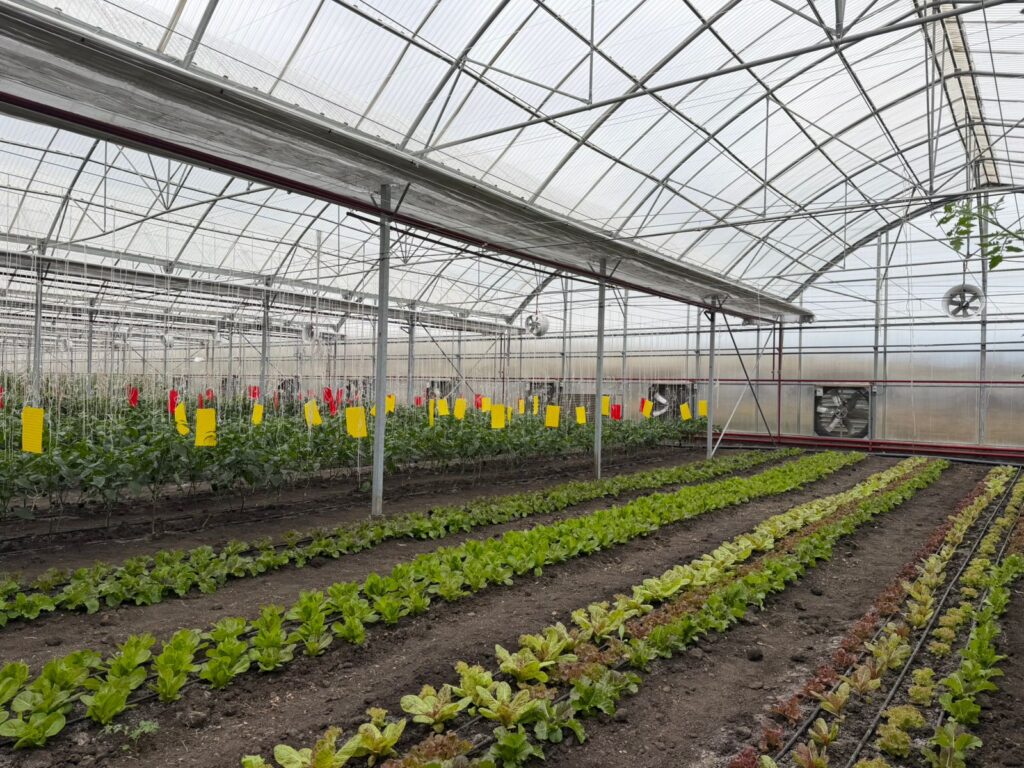
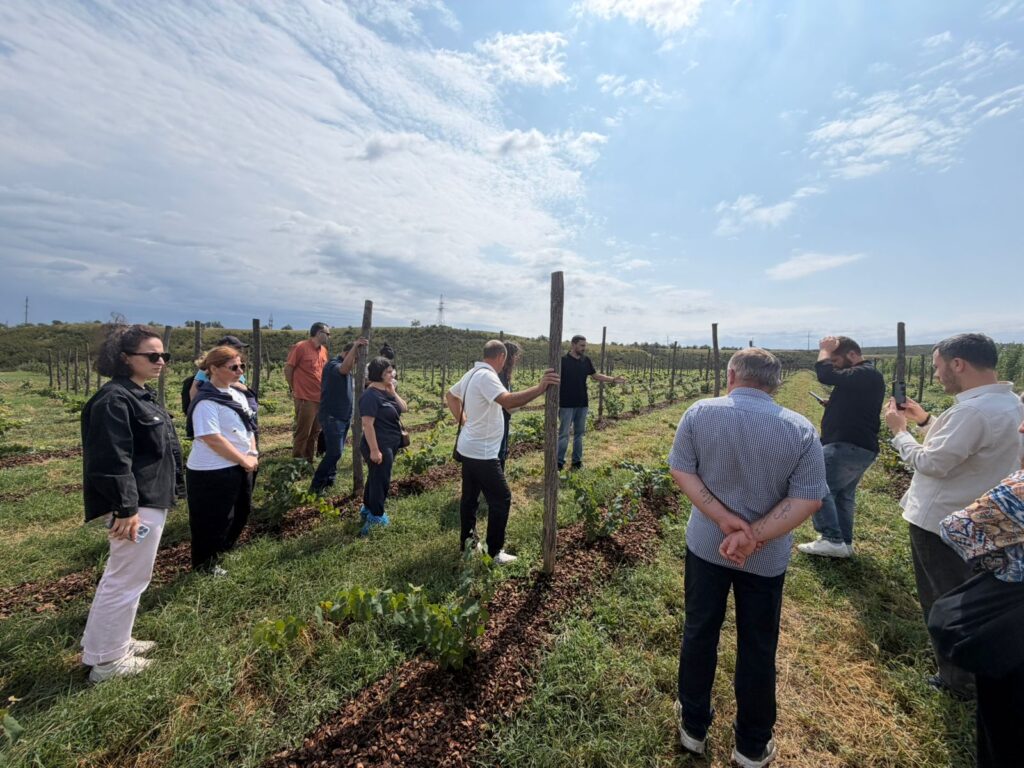
Up to 20 platform members attended the study visit. The first part of the visit was dedicated to the 6-hectare innovative demonstration site “Green Container,” established by the Georgian Farmers’ Association in the village of Udabno. This multifunctional space unites farmers, professionals, researchers, agribusinesses, and students around agricultural innovation, education, and collaboration. The site bridges traditional and modern agriculture, enabling the practical testing of innovative technologies and the implementation of evidence-based best practices. Participants got hands-on experience with circular approaches in agricultural practice, which promotes the efficient use and conservation of resources. Specifically, they explored the process of creating high-value products from agricultural waste, modern methods of cultivating vineyards, fruits, vegetables, and specialty crops, integrated soil management and plant nutrition systems, as well as efficient water management technologies such as drip irrigation and fertigation.
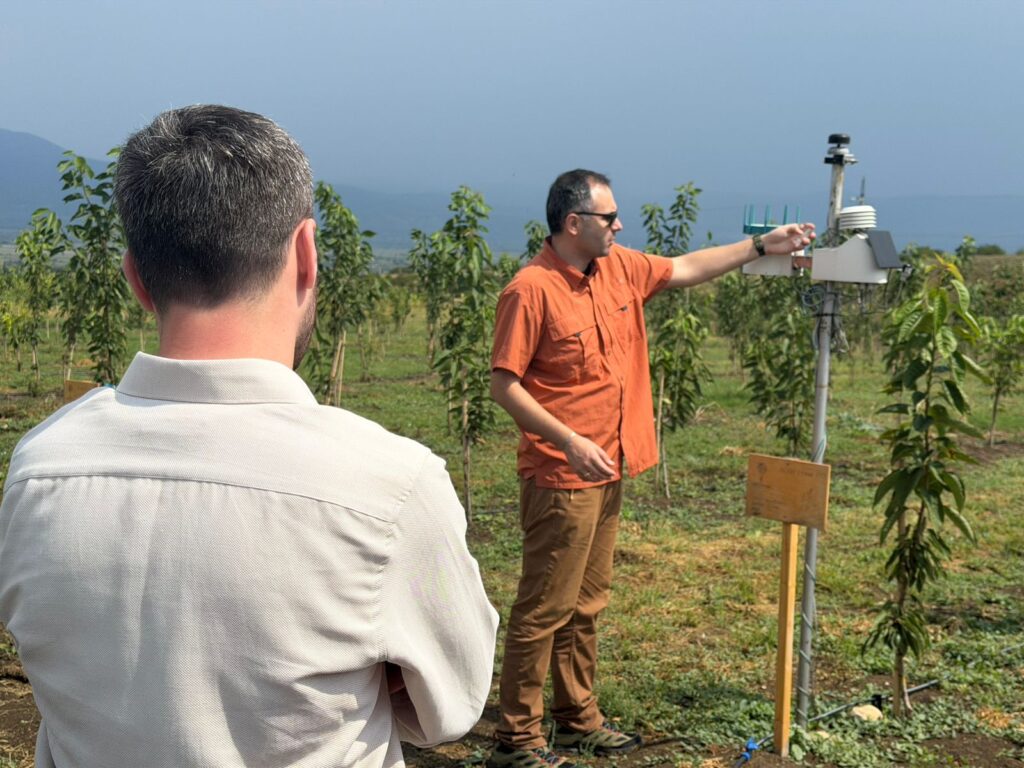
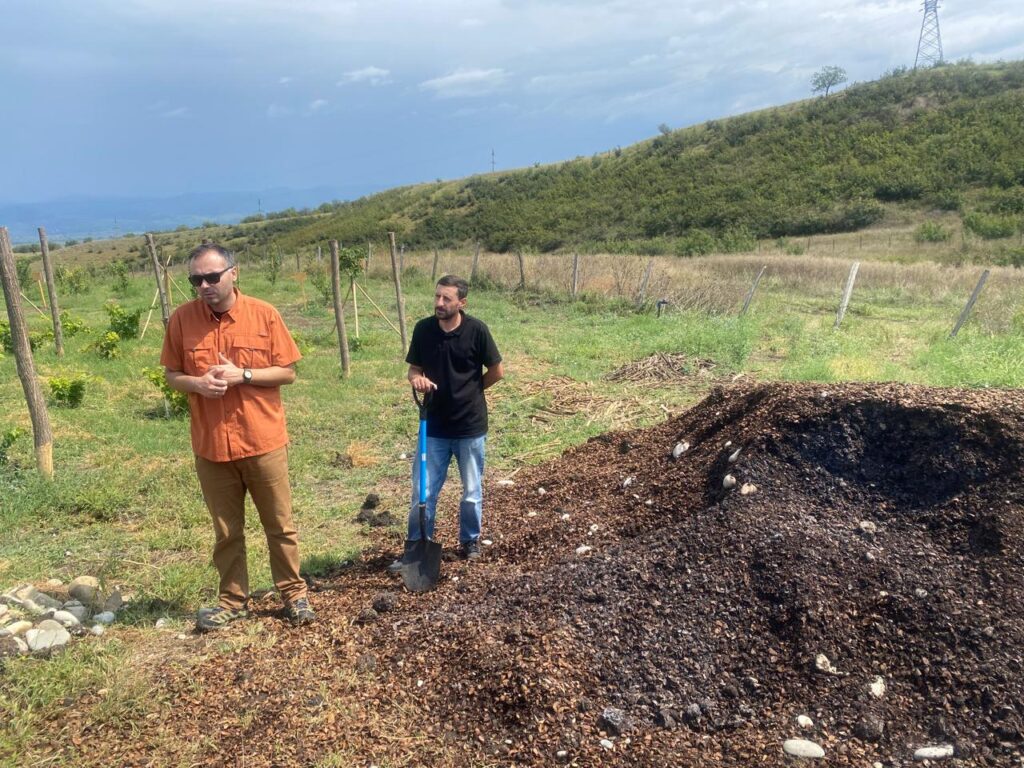
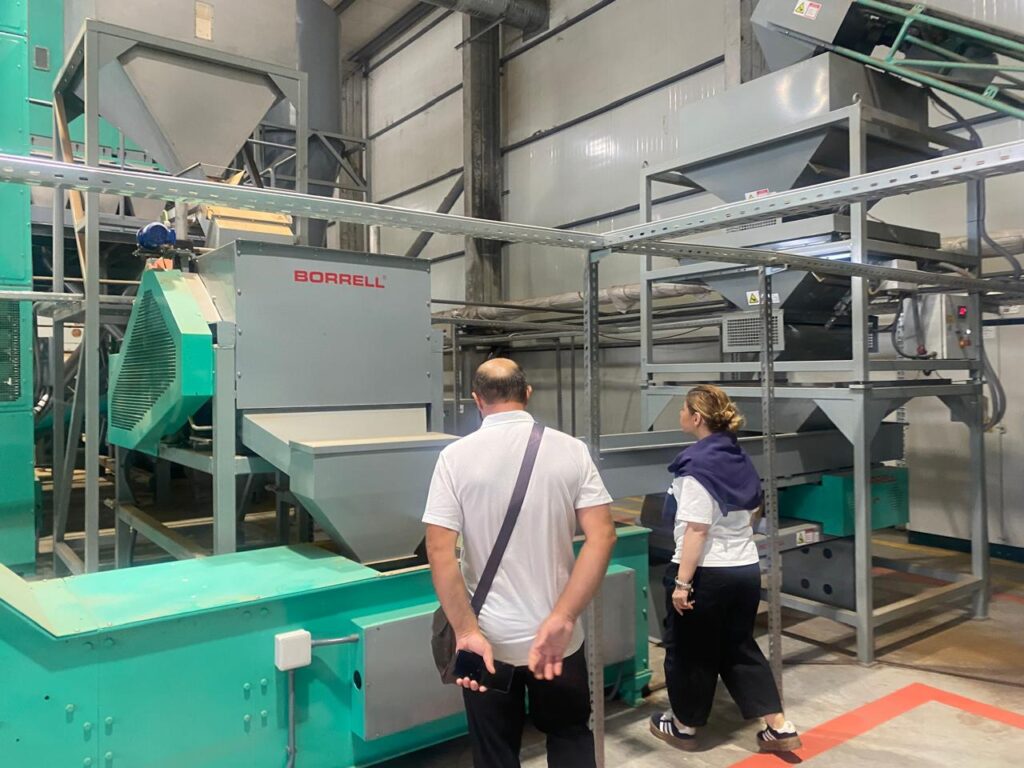
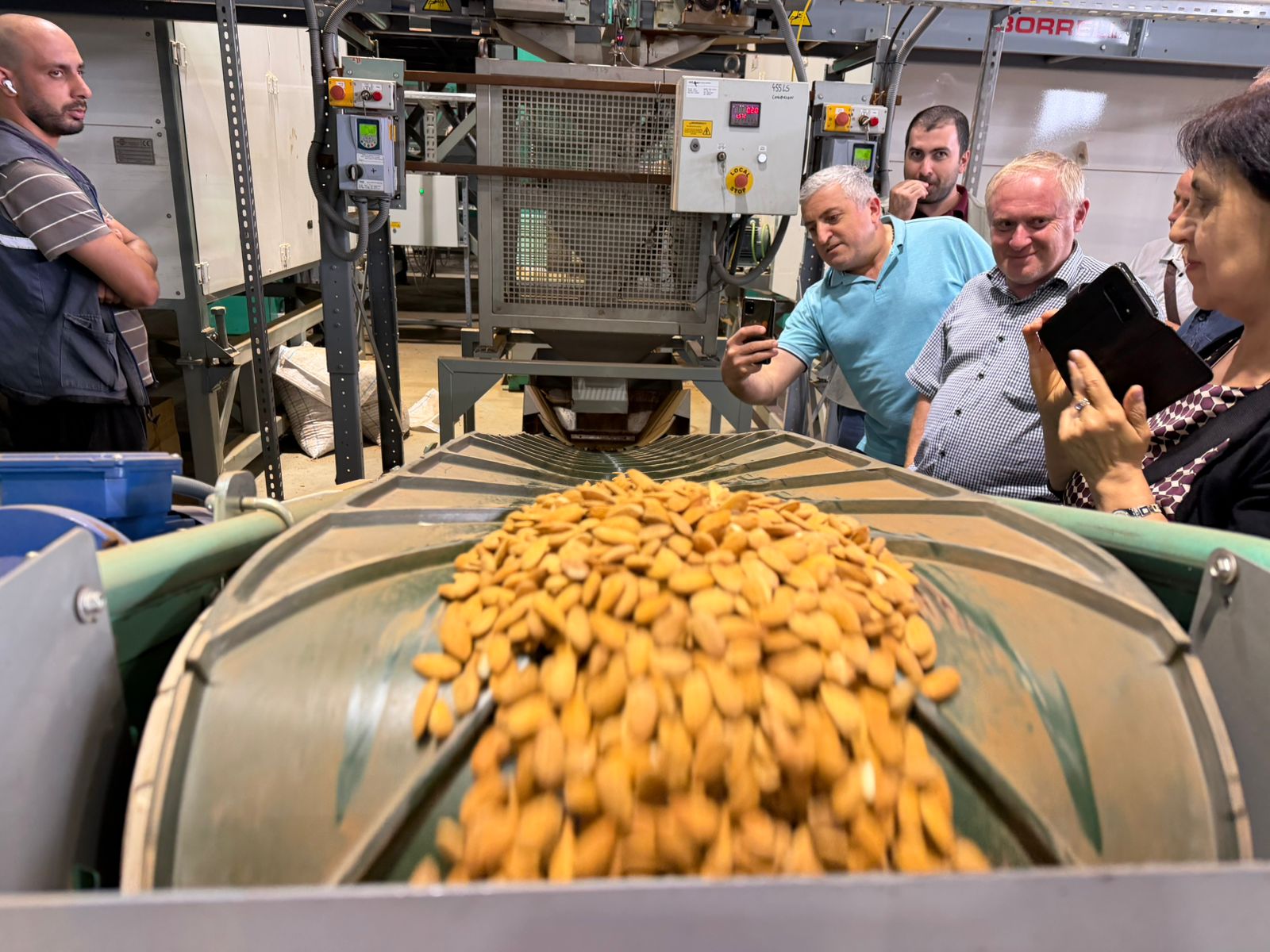
In the second half of the day, participants toured the regenerative almond orchards of the company “Udabno,” spanning thousands of hectares. Participants learned on-site about circular economy models, composting, and efficient resource management. The company relies on a modern ecosystem model where minimal human intervention, livestock grazing on open pastures, and beekeeping maintain a natural balance. Food and green waste generated during production are transferred to a composting site and converted into organic fertilizer required for soil enrichment, while maximum water conservation is achieved through drip irrigation and specialized machinery. Additionally, the company operates a greenhouse for growing fruits and vegetables.
The study tour was organized by CENN within the framework of the EU-funded project “Circular Cities and Regions in Georgia”. The project is implemented by CENN in partnership with the international organization ICLEI Europe.
For more information about the project and the circular economy, please visit the Circular Economy Knowledge Hub: https://circulareconomy.ge