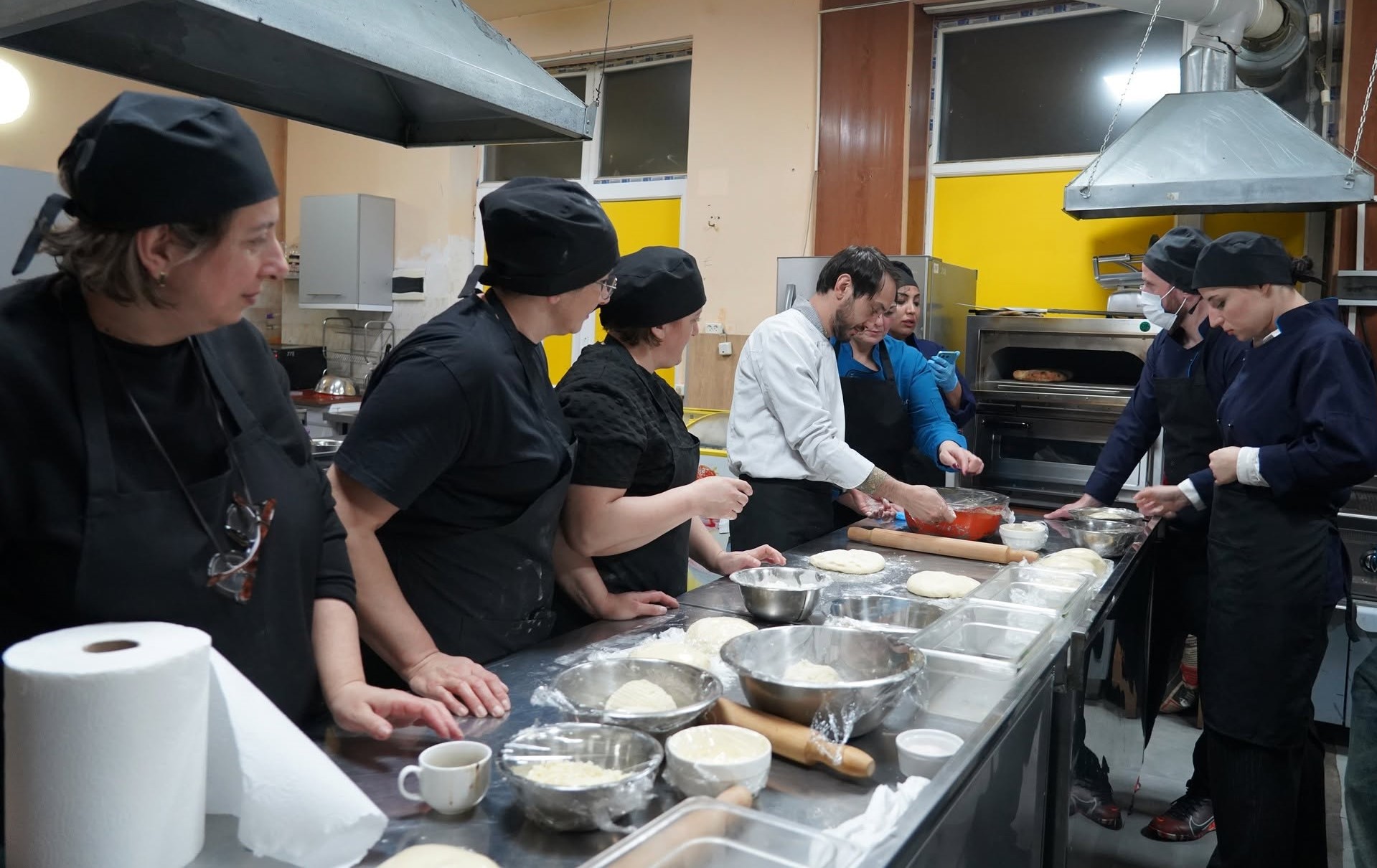
The hospitality sector in Adjara, particularly in Batumi, is growing rapidly. The city features many large-scale brand hotels and restaurants that require personnel well-versed in international standards. College “Black Sea” successfully meets this demand by supplying the region with highly qualified professional personnel.
Along with the growth of the sector, rational resource management and environmental and social responsibility have become integral parts of modern international standards. This is precisely why it is important that, with the support of the European Union and in cooperation with CENN, the college has introduced circular economy principles into its gastronomy direction, specifically within the culinary and confectionery programs.
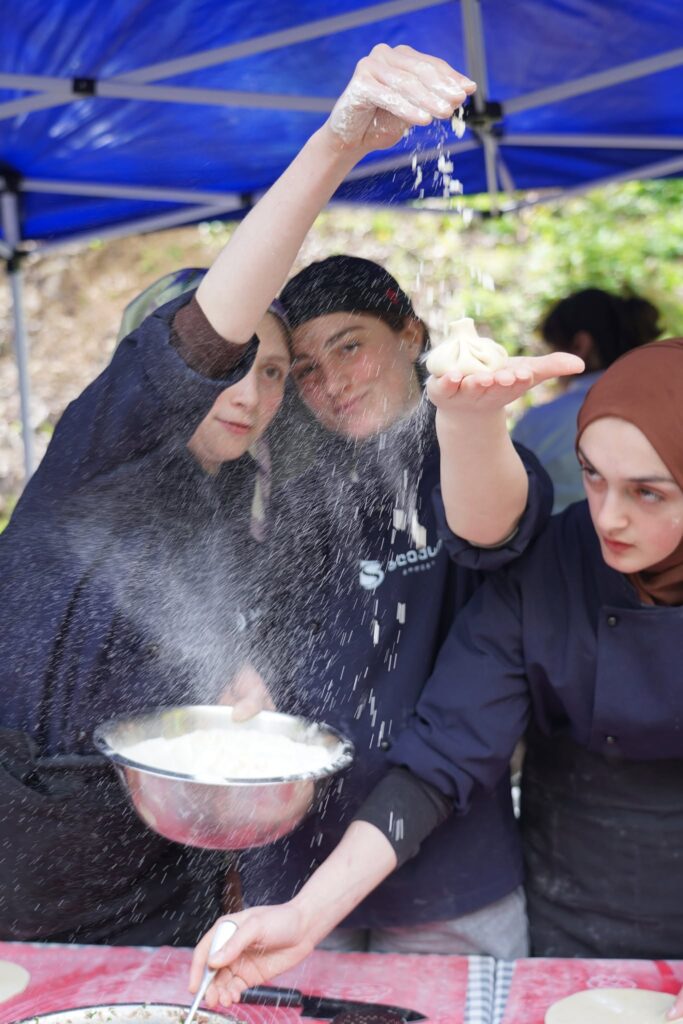
This approach aims to reduce food waste and develop sustainable practices, providing graduates with the valuable knowledge and skills that leading hotels and restaurants highly appreciate today.
As Giorgi Gogitidze, the director of College “Black Sea”, notes, introducing circular economy principles into the culinary and confectionery directions in cooperation with CENN is an important step in the college’s development strategy. This initiative allows the institution to bring its educational programs even closer to modern international standards and to foster socially responsible professionals.
What does this knowledge give to future chefs and confectioners?
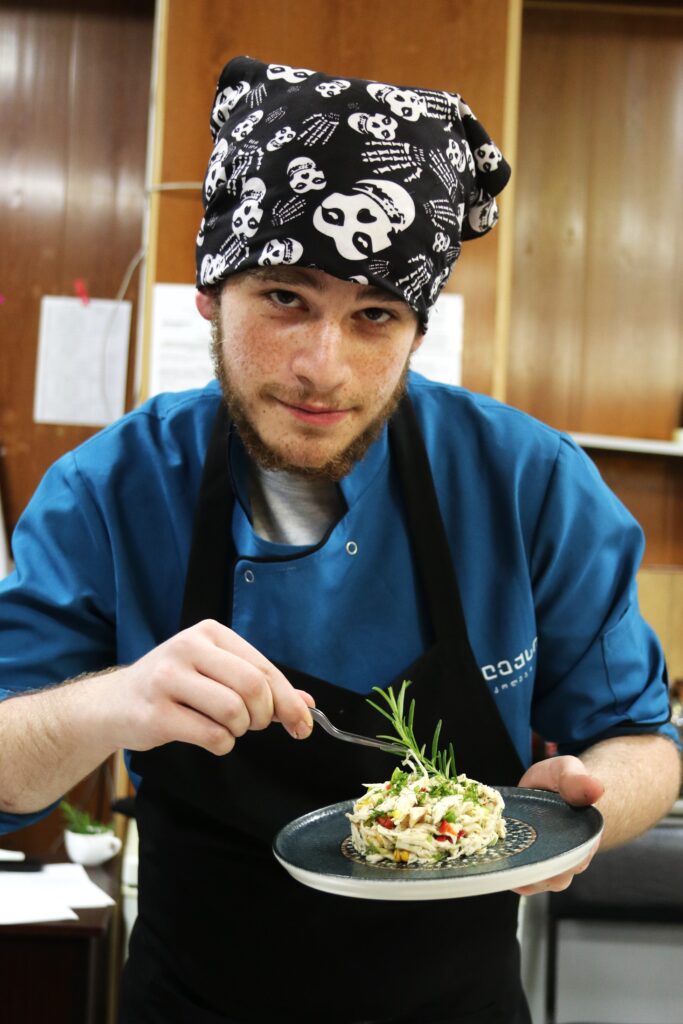
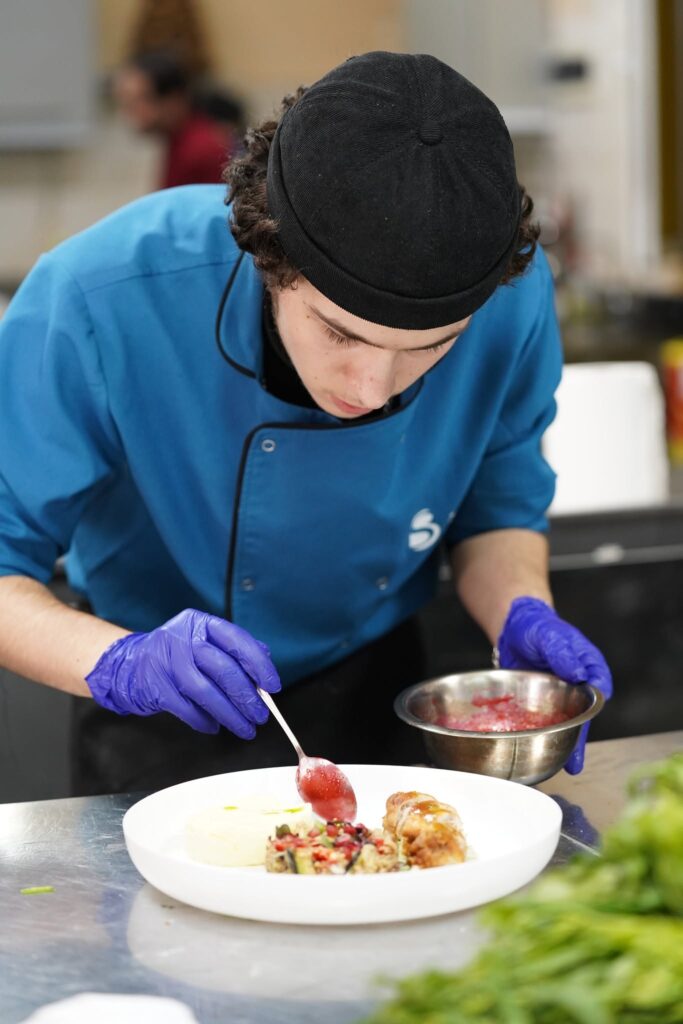
The integration of circular economy and zero-waste culinary methods into the culinary and confectionery programs gives students significant advantages in a real working environment. As Mamuka Meladze, a vocational education teacher at the college, states, “Today, sustainability and minimising food waste have become a main standard in the global culinary industry. Zero-waste preparation methods teach professionals how to use products as efficiently as possible, which significantly reduces costs. In addition, working with zero-waste principles develops innovative and creative thinking, which is the best way to search for new and unique flavours. Ultimately, realizing the value of each ingredient and environmental responsibility shapes students into high-class, ethical, and modern professionals.”
Future Plans and Development Vision of the College
As college director Giorgi Gogitidze notes, transitioning to a circular economy and sustainable development is a global priority, and vocational education must constantly respond to the modern challenges of the labour market. The college is not stopping at what has been achieved and plans to further expand circular economy and sustainable practices. The integration of similar approaches and modules is planned in other vocational programs of the institution (such as hotel service and tourism) so that the culture of sustainability encompasses the entire college. Furthermore, joint projects, trainings, and practical activities are planned with CENN and other environmental organisations, while cooperation with leading hotels and restaurants in the region will ensure that the sustainable practices mastered by students are introduced and scaled up in real work environments.
About the project
This initiative is implemented by CENN within the framework of the EU-supported project “Circular Cities and Regions in Georgia”. The project covers the Kakheti and Adjara regions and promotes the creation of green value chains and the establishment of circular economy principles at the local level.
For detailed information, visit the Georgian Circular Economy Knowledge Hub: https://circulareconomy.ge/ka/