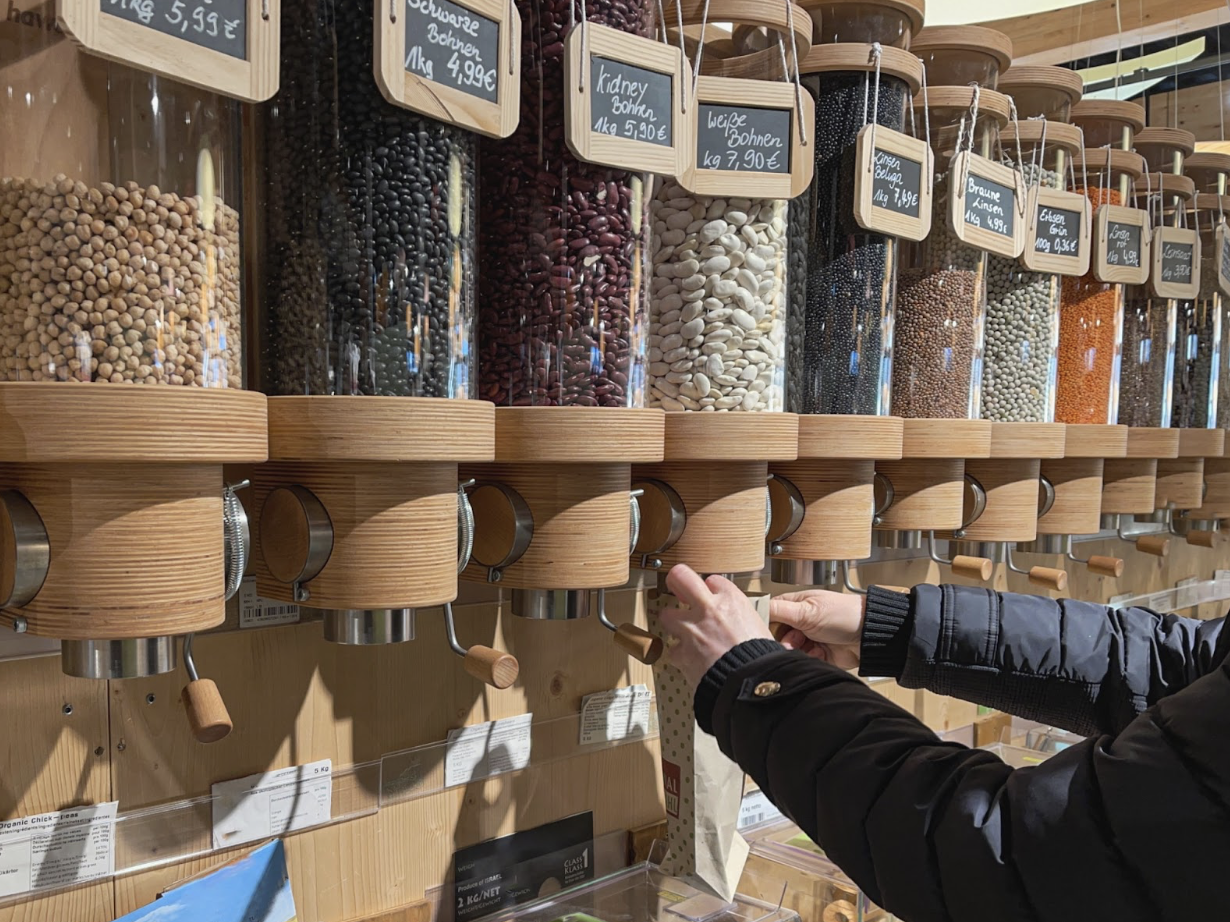
Imagine walking into your favorite clothing store, but instead of just browsing the latest trends, you see a section dedicated to repaired and refurbished items. Nearby, a kiosk invites you to return old garments in exchange for store credit. This might sound like something from a sustainable future, but it’s already happening— retailers are adopting circular economy principles, turning the industry’s wasteful habits on their head.
For decades, retail thrived on a linear system: take resources, make products, sell them, and watch them eventually end up in landfills. However, with growing consumer demand for sustainability and advancing environmental regulations, brands are changing how they design, sell, and recover products. The goal is to keep materials in use for as long as possible, minimizing waste and maximizing value.
In this article, we’ll explore what the circular economy is and how it offers leverage to convert a story of discard into one of sustainable regeneration!
Retail Industry Can’t Afford to Stay Linear (Not Anymore)
The traditional “buy-use-discard” model is hitting its limits. The fashion industry alone produces 92 million tons of textile waste annually, while e-commerce packaging generates mountains of cardboard and plastic. Beyond the environmental toll, this waste represents lost revenue—valuable materials thrown away instead of being repurposed.
Enter the circular economy, where products are built to last, designed for reuse, and recovered at the end of their life cycle. It’s not just about recycling; it’s about rethinking every step of retail, from sourcing to resale.
Designing for Durability (and Easy Disassembly)
What if everything you owned could have multiple lives? That’s the vision driving today’s product designers, who are creating items meant to be repaired, refurbished, or completely transformed when their first life ends.
- Fairphone – Their modular smartphones allow users to replace individual components (batteries, cameras, etc.) instead of discarding the entire device;
- Patagonia’s Worn Wear Program – The outdoor brand designs rugged clothing with reinforced stitching and offers free repair guides. They even encourage customers to trade in used gear for store credit.
Embracing Second-Hand Markets
Retailers are tapping into the $177 billion resale economy by selling pre-owned goods, cutting out third-party platforms, and keeping profits in-house.
- Levi’s SecondHand – The denim company refurbishes and resells its own vintage jeans, often at a premium, proving that “used” doesn’t mean “low value.”
Closing the Loop with Take-Back Programs
Instead of letting products disappear into landfills, retailers are incentivizing returns to reclaim materials or resell items outright.
- IKEA’s Buy Back & Resell – Customers return old furniture in exchange for store credit; IKEA refurbishes and resells it at discounted prices in dedicated “Circular Hubs;”
- H&M’s Garment Collecting – The fashion chain accepts any brand’s used clothing (rewarding donors with discounts), then recycles fibers into new collections like its “Conscious Exclusive” line.
Rethinking Packaging for Reuse, Not Waste
Single-use packaging accounts for 40% of global plastic waste. Innovators are replacing it with systems designed for endless reuse.
- Loop by TerraCycle – Partners with brands like Pantene and Häagen-Dazs to deliver products in stainless steel or glass containers. Empty packages are picked up, cleaned, and refilled—like a modern milkman model;
- Lush’s Naked Packaging – The cosmetics brand sells shampoo bars, solid conditioners, and even deodorant “naked” (package-free) or wrapped in compostable materials, eliminating 6 million plastic bottles annually.
The Push for Circularity: How Governments and NGOs Are Supporting the Change
Without systemic support, individual businesses struggle to transition to circular models. The shift toward a circular economy isn’t just being led by forward-thinking businesses—governments, international organizations, and NGOs are also playing a crucial role in accelerating this transition. Through policy reforms, funding initiatives, and grassroots programs, they’re helping businesses and communities rethink waste, reuse resources, and build sustainable systems.
Governments worldwide are driving circular economies through policies like the EU’s Circular Economy Action Plan (mandating recycling and sustainable design), France’s Anti-Waste Law (banning destruction of unsold goods), and Japan’s Sound Material-Cycle Society (turning waste into resources). These regulations create fertile ground for circular business models to flourish.
While governments set the rules, NGOs and development agencies work on the ground to implement circular solutions, especially in regions where infrastructure and awareness are still developing. One standout example is CENN, which, in partnership with GIZ and ICLEI, is driving sustainable development in Georgia.
Their initiatives include Tbilisi Circular Lab (a collaborative platform helping local businesses adopt circular practices) and a community training program for small enterprises and artists on upcycling, eco-design, and resource efficiency.
It’s Time to Support Circular Retail
Small actions add up. Together, we’re not just reducing waste—we’re rebuilding an economy where everything has value, and nothing is truly “thrown away.” The best part is that this change doesn’t require perfection—just participation.