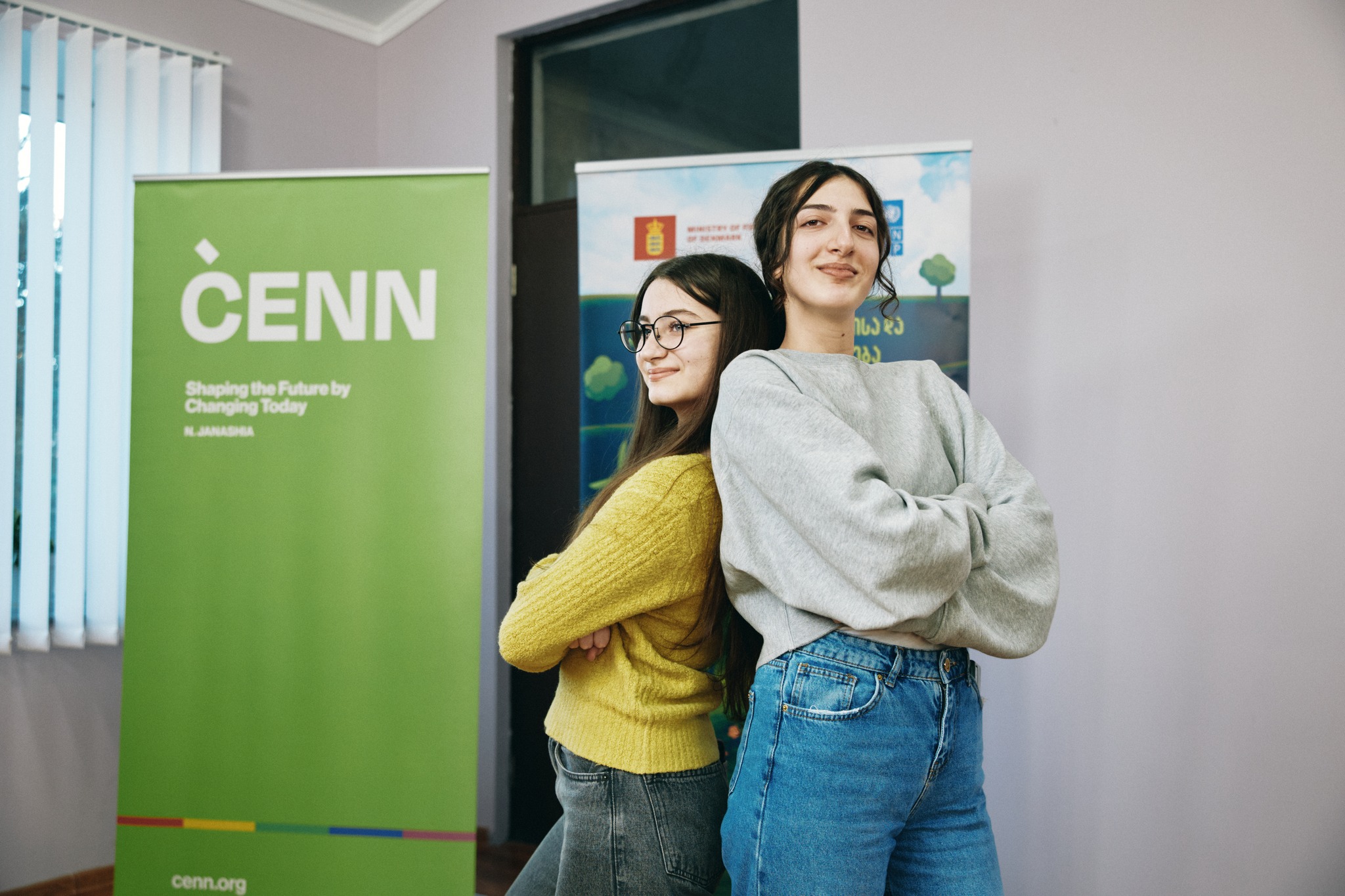
Duration: 14/04/2025 – 14/12/2025
Geographic area: Khobi and Poti municipalities
Implemented by: CENN
Donor: UNDP and Danish Government
Local communities in Georgia, particularly those in Poti and Khobi municipalities, face significant challenges associated with climate change and environmental degradation. These areas are directly affected by intensified extreme weather events, shifts in seasonal patterns, biodiversity loss, water scarcity, and pollution of soil and water resources. Such impacts have serious impacts on agriculture, energy, economic stability and overall quality of life for residents, which emphasizes the importance of adopting comprehensive measures at the local level to mitigate those negative impacts.
Youth are key actors that can play an important role in addressing the above-noted environmental challenges; however, their potential is not fully utilized. Georgia’s NDC recognizes their ability to bring creativity, innovative thinking and digital proficiency in the process, which is positioning them as valuable partners in promoting environmental sustainability in places. However, different barriers prevent them from fully contributing to the green transition. Limited structured opportunities for meaningful participation in decision-making processes, insufficient resources and a lack of institutional support significantly limit their impact. Existing youth-driven initiatives are often short-term, lacking the continuity, scalability and structured support necessary to sustain long-term environmental outcomes.
In response to these challenges, this Responsible Party Agreement (RPA) will empower youth in Poti and Khobi municipalities through targeted capacity-building activities such as youth camps, mentorship sessions and development and implementation of the small-scale initiatives that address green transition challenges in their communities. These activities will equip school students with essential knowledge, practical skills and innovative tools required to actively participate in and lead local green transition within their communities. The program aligns closely with the Greening the Future, Advancing Rights and Stability: Spurring an Inclusive and Green Transition with Responsive Governance in the Eastern Neighbourhood Region project’s broader objective of promoting inclusive and responsive governance and a green transition by fostering community engagement, strengthening local capacities, and ensuring sustainability in local development processes.
Environmental sustainability and the green transition at the local level were pursued through a coordinated and participatory approach involving educational institutions, civil society organizations, the private sector, and the wider community. The RPA was implemented through a collaborative and inclusive process that actively engaged the RPA implementation team, school administrations, teachers, students, and community-based organizations in the municipalities of Poti and Khobi throughout all phases, from preparation to implementation. This ensured strong alignment with local needs and contextual realities.
The RPA focused on strengthening youth capacities and empowering young people as agents of change. CENN developed and delivered tailored educational modules on climate change, sustainable agriculture, energy efficiency, water management, nature-based solutions, and circular economy principles, alongside soft skills development in civic engagement, advocacy, project implementation, and digital communication. Interactive methodologies and locally relevant case studies were applied.
Youth participants were selected through targeted outreach and orientation meetings, followed by intensive youth camps combining theoretical learning with practical workshops. To support the practical application of acquired skills, a competition was organized to develop and implement small-scale green initiatives addressing local environmental challenges. Selected initiatives received financial support and continuous mentorship from CENN.
Monitoring and evaluation mechanisms were integrated throughout the RPA to track progress, assess impact, and document lessons learned, while regular stakeholder consultations fostered multi-sectoral cooperation. The RPA concluded with a public conference and broad dissemination of results through digital platforms, raising awareness, encouraging behavioral change, and strengthening local capacities in support of municipal and national sustainability goals.

Youth Development
- Youth aged 14–17 in Khobi and Poti municipalities were empowered to actively engage in and lead green transition and environmental sustainability initiatives through capacity building, awareness-raising, and practical application of knowledge.
- The knowledge, skills, and practical capacities of young people were strengthened through tailored educational and training modules covering climate change adaptation and mitigation, climate-smart agriculture, energy efficiency, nature-based solutions, sustainable water management, circular economy practices, and soft skills related to civic engagement, advocacy, communication, and project implementation.
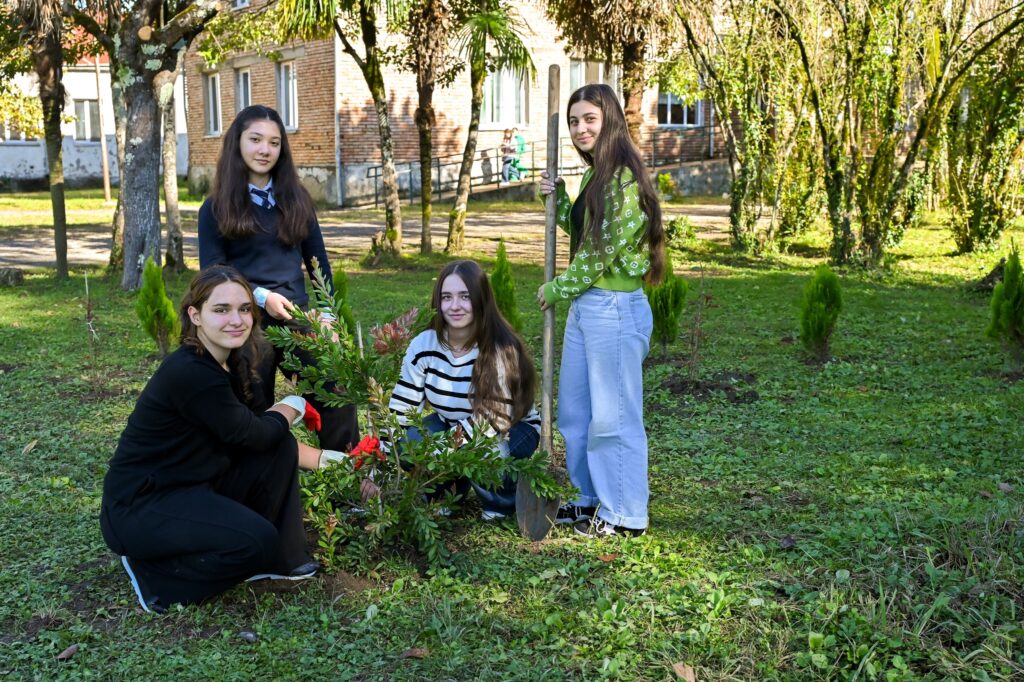
- Youth were supported through camps and ongoing mentorship to design and implement small-scale, community-based initiatives addressing local green transition challenges.
Climate change mitigation and adaptation
- Awareness and active engagement of local communities increased in relation to environmental sustainability, climate action, and civic participation.
- Educational and promotional materials were developed and widely disseminated among schools, communities, and local stakeholders, contributing to greater understanding and adoption of sustainable environmental practices.
- Youth-led small-scale green initiatives were successfully implemented at the community level, serving as practical demonstrations and raising public awareness of sustainable environmental management.
- Project achievements, lessons learned, and best practices were effectively communicated to broader audiences through digital media channels.